
SFDA vs. EDE: How Saudi Arabia and UAE Regulate Weight Loss Drugs Differently
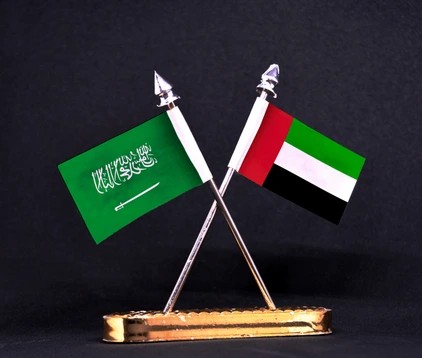
Saudi Arabia and the UAE are the two largest pharmaceutical markets in the GCC and both have moved quickly to approve the newest generation of weight loss drugs, including GLP-1 medicines such as semaglutide (Wegovy), tirzepatide (Mounjaro/Zepbound), and orforglipron (Foundayo).
But for pharmaceutical companies planning market entry across both countries, one critical fact is often underestimated: the SFDA (Saudi Food and Drug Authority) and the EDE (Emirates Drug Establishment) are not interchangeable. They operate different registration systems, run on different timelines, have different local agent requirements, and take different approaches to pricing. A registration approved in one country does not automatically transfer to the other.
This guide explains exactly how the two regulatory frameworks compare so your market entry strategy is built on an accurate understanding of both.
Who Are the SFDA and the EDE?
The Saudi Food and Drug Authority (SFDA)
The Saudi Food and Drug Authority (SFDA) is the independent federal authority responsible for regulating pharmaceuticals, biologics, medical devices, food, and cosmetics in Saudi Arabia. The SFDA was formed in 2003, and it operates under the direct supervision of the Council of Ministers, thus being recognized as the most sophisticated and stringent regulatory authority in the GCC. It operates its own Drug Sector through the Saudi Drug Registration (SDR) portal, with a National Pharmacovigilance Centre (NPC) managing post-market safety surveillance.
Saudi Arabia represents over 50% of the entire GCC pharmaceutical market, the single most important market in the region for any company targeting the Middle East.
The Emirates Drug Establishment (EDE)
The Emirates Drug Establishment (EDE) is the UAE’s federal authority for pharmaceutical and medical product regulation, established in September 2023 and fully operational as the primary regulator since December 2025, when it assumed 44 core services from the Ministry of Health and Prevention (MOHAP) under Federal Decree-Law No. 38 of 2024.
The EDE manages all pharmaceutical marketing authorisations, import permits, pharmacovigilance, and pharmaceutical facility licensing in the UAE through its portal at ede.gov.ae. Any company that last checked UAE drug registration requirements before January 2025 is working with outdated information; the EDE has replaced MOHAP as the central registration authority.
How Each Country Approved the Same Weight Loss Drugs
A useful way to understand how SFDA and EDE UAE differ in practice is to look at how they handled the same wave of GLP-1 weight loss drug approvals.
The UAE moved first and fastest. When Eli Lilly’s orforglipron (Foundayo) received FDA approval on 1 April 2026, the EDE approved it on 3 April 2026 two days later making the UAE the second country in the world to register the drug. Wegovy (oral semaglutide) followed through the EDE shortly after.
The SFDA approved Foundayo approximately four months later, in August 2026, following its standard comprehensive dossier assessment including two Phase 3 clinical trial datasets. The SFDA noted eligibility criteria and safety considerations consistent with the FDA and EDE approvals but conducted its own independent scientific review rather than relying on reference authority recognition alone.
This timing difference is not a reflection of regulatory quality; the SFDA is highly regarded globally. It reflects a structural difference in how the two authorities approach innovative drug approvals and the depth of independent scientific review each conducts.
Comparison: SFDA vs. EDE for Weight Loss Drug Registration
| SFDA (Saudi Arabia) | EDE (UAE) | |
| Established | 2003 | 2023 (fully operational 2025) |
| Governing legislation | Multiple SFDA regulations | Federal Decree-Law No. 38 of 2024 |
| Submission portal | Saudi Drug Registration (SDR) | ede.gov.ae (UAE PASS) |
| Dossier format | eCTD (ICH CTD) | eCTD (ICH CTD) |
| Labelling | Arabic-English bilingual | Arabic-English bilingual |
| Local agent required | Yes, Saudi-licensed entity | Yes, UAE-licensed entity |
| Multi-agent requirement | No current requirement | Yes since February 2026 |
| Verification pathway | Yes for FDA, EMA, MHRA, PMDA, Health Canada, TGA, Swissmedic approvals | Yes for FDA, EMA, MHRA, PMDA approvals |
| Standard timeline | 12 – 18 months (verification: 9 – 18 months) | 3 – 6 months (verification: 25 – 45 working days) |
| Pricing review | Yes, mandatory before registration | Yes, mandatory before registration |
| GCC central registration | Can be used as complementary route | Can be used as complementary route |
| Pharmacovigilance | Saudi QPPV required; NPC reporting | UAE QPPV required; EDE reporting |
Key Differences Explained
1. Registration Timeline
This is the most commercially significant difference for pharmaceutical companies. The EDE UAE offers one of the fastest innovative drug approval timelines in the world. For products already approved by the FDA or EMA, the verification pathway can deliver UAE registration in as little as 25 to 45 working days, the speed that allowed Foundayo to be registered within 48 hours of its FDA approval.
The SFDA, by contrast, runs significantly longer timelines even on the verification pathway: approximately 9 to 18 months for generics and established products, and longer for new chemical entities. The SFDA conducts deeper independent technical review, which adds rigour but extends time to market. Priority review is available for certain products but still runs 6 to 9 months.
For a pharmaceutical company launching a new GLP-1 medicine, this means UAE market entry can be achieved significantly faster than Saudi market entry, often by a year or more.
2. Local Agent Requirements
Both the SFDA and EDE UAE require a locally licensed entity to act as the applicant and local agent. In Saudi Arabia, this means a Saudi-licensed pharmaceutical establishment. In the UAE, it means a UAE-licensed pharmaceutical entity registered with the EDE.
One important 2026 distinction: since February 2026, the EDE requires pharmaceutical companies to appoint more than one authorised agent per registered product, a change designed to reduce supply disruption risk. The SFDA does not currently have an equivalent multi-agent requirement. Companies entering the UAE market now need to structure their distribution arrangements with this in mind from the start.
3. The Pricing Review Process
Both regulators require mandatory pricing approval before a marketing authorisation certificate is issued and neither process is a formality.
The SFDA pricing review benchmarks proposed Saudi prices against a basket of reference countries and the cost-plus manufacturing price. For GLP-1 medicines, where the branded price in Western markets is high, SFDA pricing approval can be a point of negotiation.
The EDE UAE pricing committee likewise evaluates the proposed UAE price against comparable registered products and regional benchmarks. The UAE pricing certificate fee is AED 500 after committee approval.
4. Pharmacovigilance
Both the SFDA and EDE UAE require an active pharmacovigilance programme as a condition of registration and ongoing market presence.
In Saudi Arabia, pharmacovigilance is managed by the National Pharmacovigilance Centre (NPC) within the SFDA, and a Saudi-qualified Pharmacovigilance Officer (QPPV) is required. In the UAE, the EDE manages pharmacovigilance, and a UAE QPPV appointment and pharmacovigilance plan (AED 1,000 fee) are required at registration. Periodic safety update reports (PSURs) and adverse event reporting are both required in both countries.
5. The GCC Central Registration Pathway
Both Saudi Arabia and the UAE participate in the GCC Central Drug Registration (GCC-DR) pathway, administered by the GCC Health Council in Riyadh. This allows a single dossier submission to be reviewed for approval across multiple GCC member states simultaneously. While not mandatory, it can be an efficient complement to national registration for companies seeking to cover the wider GCC Kuwait, Bahrain, Qatar, Oman, UAE, and Saudi Arabia in one programme.
What This Means for GLP-1 Weight Loss Drug Market Entry
For pharmaceutical companies bringing GLP-1 medicines or weight loss drug products to the GCC region, the strategic implication is clear: the UAE and Saudi Arabia are not sequential; they are parallel workstreams.
Waiting for UAE EDE registration before starting the SFDA process adds 12 to 18 months to Saudi market entry unnecessarily. The two processes should run simultaneously from the day a reference approval (FDA or EMA) is secured. Given the UAE’s dramatically faster timelines, UAE market entry often comes first but Saudi Arabia, with its larger market share, is the bigger prize in the region.
Weight loss drugs, including all major GLP-1 medicines, are active priorities for both regulators. The SFDA’s Vision 2030 healthcare transformation agenda and the EDE’s stated commitment to accelerating access to innovative therapies both point to a regulatory environment that is actively supportive of new obesity and metabolic medicine approvals provided the dossier is right.
How Hawkridge Corp Can Help
Whether you are registering a GLP-1 medicine with the SFDA, the EDE UAE, or both in parallel the process requires the right local structure, a complete and correctly prepared dossier, accurate pricing strategy, and pharmacovigilance capability from day one.
At Hawkridge Corp, we support pharmaceutical manufacturers and distributors through the full UAE EDE registration process from local entity structuring and eCTD dossier preparation to EDE portal submission, pricing committee engagement, and post-approval pharmacovigilance management.
For companies targeting both the UAE and Saudi Arabia, we provide coordinated regulatory strategy that ensures both registration processes move simultaneously, with no avoidable delays on either side.Contact Hawkridge Corp today to discuss your GLP-1 medicine registration strategy across the UAE and the wider GCC market.
Final Thoughts
The SFDA and EDE UAE are both capable, active regulators with clear processes but they operate on different timelines, different agent structures, and different approaches to innovative drug review. For GLP-1 medicines and weight loss drugs, both markets are commercially significant and regulatory ready.
The companies that succeed in the GCC are the ones that run Saudi and UAE registration in parallel from the start not sequentially. Getting both market entries right, at the right time, with no avoidable delays, is exactly what the right regulatory partner delivers.