
How to Get Import and Marketing Authorization for GLP-1 Medicines in the UAE: EDE Requirements Explained
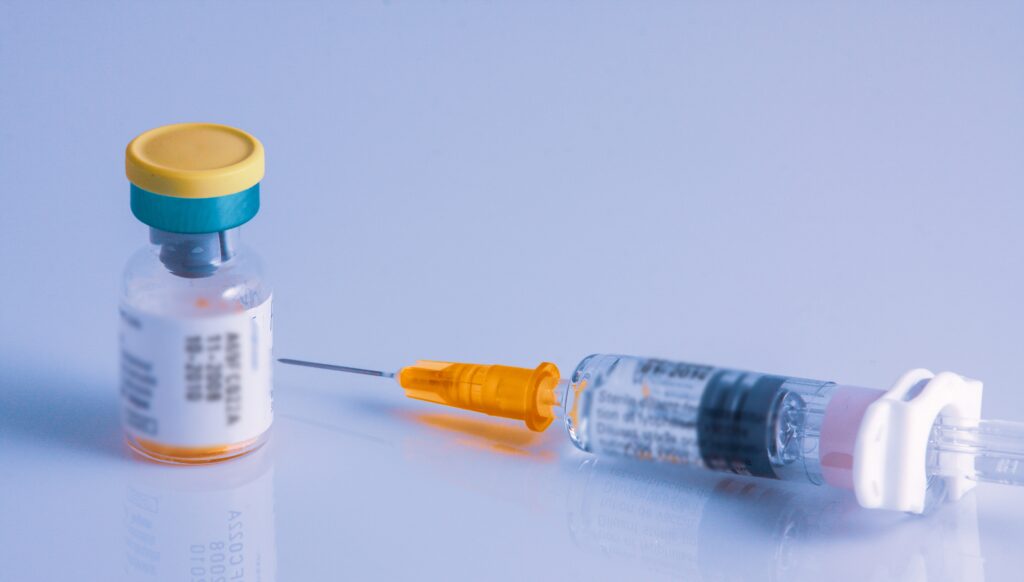
The market for GLP-1 medicines has grown faster than almost any other pharmaceutical category in recent memory. In the UAE, demand has followed the same trajectory and the regulatory framework that governs how these products can be legally imported, marketed, and distributed has changed significantly since 2025.
For pharmaceutical manufacturers, distributors, and marketing companies looking to bring GLP medications to the UAE market, understanding the current Emirates Drug Establishment (EDE) requirements is not optional; it is the starting point for every other commercial decision.
This guide explains the UAE regulatory landscape for GLP-1 medicines, who the governing authorities are, what the registration process involves, and what common mistakes cause delays.
What Are GLP-1 Medicines and Why Are They Such a Priority in the UAE?
GLP-1 medicines glucagon-like peptide-1 receptor agonists are a class of pharmaceutical products used for chronic weight management and type 2 diabetes. They do so by imitating a natural gut hormone which controls hunger, delays the process of food digestion, and causes the secretion of insulin. The class includes some of the highest-demand prescription medicines globally:
- Semaglutide: marketed as Ozempic (diabetes) and Wegovy (weight management), both injectable
- Tirzepatide: marketed as Mounjaro (diabetes) and Zepbound (weight management), a dual GIP/GLP-1 agonist
- Orforglipron (Foundayo): the first oral, small-molecule GLP-1 receptor agonist, approved by the FDA and the UAE EDE in April 2026
All three GLP medications are registered with the UAE EDE and are available in UAE pharmacies by prescription. More products in this class are in advanced clinical development, with regulatory filings expected in 2026 and 2027.
The UAE’s interest in this class is clinically driven. Obesity is associated with over 200 diseases and health complications including type 2 diabetes, hypertension, and multiple cancers and prevalence rates in the UAE make this a healthcare priority. The EDE has moved quickly to approve GLP-1 medicines: the UAE was the second country in the world to register Foundayo (orforglipron), doing so within 48 hours of FDA approval.
For pharmaceutical companies, this regulatory momentum represents a genuine market opportunity — provided the compliance pathway is navigated correctly.
Who Governs GLP-1 Medicine Registration in the UAE?
Before exploring the process, it is essential to understand which authority is responsible and how that has changed.
The Emirates Drug Establishment (EDE)
The Emirates Drug Establishment (EDE) is now the federal authority responsible for all pharmaceutical product registration, marketing authorisations, import permits, and pharmacovigilance in the UAE. It was established on 29 September 2023 and formally took over 44 core regulatory services from the Ministry of Health and Prevention (MOHAP) on 29 December 2025, under Federal Decree-Law No. 38 of 2024.
Such a move is important for any pharmaceutical company which reviewed the UAE drug registration requirements before 2026. Processes, portal systems, and contact points that previously sat with MOHAP are now managed entirely by the EDE through its portal at ede.gov.ae.
No GLP-1 medicine or any pharmaceutical product may be imported, marketed, sold, or distributed in the UAE without prior EDE marketing authorisation. Violations result in product seizure, financial penalties, and facility licence consequences.
MOHAP’s Remaining Role
MOHAP retains jurisdiction over community pharmacies, compounding pharmacies, and certain narcotic drug control services. For standard GLP medications registered commercial products the EDE is the sole registration authority.
Emirate-Level Authorities
The Department of Health Abu Dhabi (DOH) operates a separate drug formulary for the Abu Dhabi healthcare market. The Dubai Health Authority (DHA) and Sharjah Health Authority (SHA) regulate healthcare facilities within their respective emirates. EDE federal registration is required regardless of which emirate the product will be distributed in emirate-level processes run in parallel, not in sequence.
The UAE Marketing Authorisation Process for GLP-1 Medicines
The standard EDE pharmaceutical registration pathway applies to GLP-1 medicines and GLP medications in the same way as other prescription pharmaceutical products. Here is how it works.
Step 1: Appoint a Licensed Local Agent
A foreign manufacturer cannot submit directly to the EDE. The applicant must be a locally licensed pharmaceutical establishment, a UAE-licensed marketing office, contracted manufacturer, or designated medical warehouse, registered with the EDE.
The local agent receives EDE correspondence, holds or co-holds the marketing authorisation, submits dossiers, and represents the manufacturer in all regulatory interactions. A formal agreement between the manufacturer and the local agent, including a notarised and legalised power of attorney, forms part of the registration dossier.
Important update of 2026: In February 2026, the EDE announced a new requirement for pharmaceutical companies which require that each registered medical product must have more than one authorized agent.Manufacturers planning UAE market entry for GLP-1 medicines should factor multi-agent distribution arrangements into their strategy from the outset.
Step 2: Prepare the eCTD Dossier
A complete technical dossier needs to be prepared in eCTD format based on the ICH CTD format but incorporating the UAE’s Module 1.For GLP medications, which include both peptide-based biologics (semaglutide, tirzepatide) and small-molecule compounds (orforglipron), the applicable technical standards differ by product category.
The dossier must include:
- Module 1: Country-specific administrative documents cover letter, fees, local agent power of attorney, Certificate of Pharmaceutical Product (CPP) in WHO format, sample product artwork with Arabic-English bilingual labelling
- Module 3: Quality documentation manufacturing process, specifications, stability studies
- Module 4: Non-clinical data pharmacology and toxicology
- Module 5: Clinical data clinical pharmacology, efficacy and safety studies, bioequivalence data where applicable
Incomplete Module 1 submissions are the most common cause of administrative rejection before technical review even begins.
Step 3: Submission through the EDE Portal (UAE PASS)
The applications are submitted online through the EDE portal via UAE PASS. The electronic submission process involves the complete dossier (eCTD) along with the required fee (application fee of AED 100 and registration fees of AED 7,000 per each conventional/biological product).
Step 4: Administrative and Technical Review
Completeness is initially checked by the administrative department at EDE. Incomplete dossiers will not progress to technical review and this delays the process by weeks.
Once accepted for technical review, EDE’s therapeutic area committees assess quality, non-clinical, and clinical data. Reviewers issue deficiency letters requesting clarification or additional data. The manufacturer (through the local agent) must respond within the specified timeframe.
For GLP-1 medicines already approved by a reference regulatory authority the FDA, EMA, MHRA, or PMDA a verification pathway is available that significantly reduces review time compared to the standard pathway for new generics.
Step 5: Pricing Committee Approval
Before final registration, GLP medications must pass through EDE’s pricing committee review. The committee evaluates the proposed pricing against comparable registered products and regional benchmarks. Pricing approval is a prerequisite for the marketing authorisation certificate; it cannot be bypassed.
Fee: AED 500 for the pricing certificate on approval by the committee.
Step 6: Certificate of Marketing Authorization and Import Permits
Once all the above-mentioned steps are fulfilled, the certificate of marketing authorization will be issued by the EDE. Then the product may be imported via import permits issued by the EDE.
Timelines
For a complete, well-prepared dossier, standard UAE pharmaceutical registration takes approximately 3 to 6 months. The verification pathway for products with existing FDA or EMA approval can be completed in as little as 25 to 45 working days. Delays are most commonly caused by incomplete dossiers, missing bioequivalence data, stability study deficiencies, inconsistent Arabic labelling, and pharmacovigilance officer appointment delays.
The Pharmacovigilance Obligation
Registration of GLP-1 medicines in the UAE does not end with the marketing authorisation certificate. EDE requires an active pharmacovigilance programme throughout the product’s registered lifecycle. This includes:
- Appointment of a qualified pharmacovigilance officer in the UAE
- Submission and maintenance of a pharmacovigilance plan (fee: AED 1,000)
- Periodic safety update report (PSUR) submissions
- Adverse event reporting to the EDE within required timelines
- Post-market surveillance and recall management procedures
GLP medications, given their profile and volume of use, are subject to active EDE pharmacovigilance monitoring. Compliance here is as important as the initial registration.
What About Unregistered or Compounded GLP-1 Products?
There has been a significant global issue with unregistered, compounded, and counterfeit GLP-1 medicines particularly semaglutide and tirzepatide being sold through informal channels during periods of supply shortage.
In the UAE, the position is unambiguous. A product appearing on a website, social media platform, or offered through a messaging application is not evidence of EDE registration or legal import status. Only products registered with the EDE and dispensed through MOHAP-licensed pharmacies are legally permitted in the UAE market.
Importing unregistered GLP medications into the UAE whether for commercial distribution or personal use beyond the three-month personal supply threshold is a violation of UAE pharmaceutical law. The EDE actively enforces compliance, and the consequences of non-compliance include product seizure, commercial penalties, and facility licence cancellation.
How Hawkridge Corp Can Help
Bringing GLP-1 medicines to the UAE market requires navigating a regulatory framework that has changed substantially since 2025 new authority, new digital systems, new multi-agent requirements, and strict pharmacovigilance obligations from day one.
At Hawkridge Corp, we support pharmaceutical manufacturers, distributors, and marketing companies through the complete UAE EDE registration process for GLP medications and other pharmaceutical products.
No matter if you are registering GLP-1 medicine for the first time or managing a portfolio through post-MOHAP transition to EDE, Hawkridge Corp ensures full regulatory support for your GLP-1 medicines with clearly defined timelines without any surprise. For all your GLP-1 medicine registration needs in the UAE, contact Hawkridge Corp.
Final Thoughts
The UAE’s commitment to rapid access to innovative GLP-1 medicines demonstrated by its position as the second country globally to register orforglipron signals a clear regulatory priority. For pharmaceutical companies that can navigate the EDE framework correctly, this is a high-value, high-growth market with a regulatory authority that moves faster than most.
The key is getting the process right from the start. Incomplete dossiers, incorrect agent structures, missing Arabic labelling, and pharmacovigilance gaps are the most common reasons UAE pharmaceutical registrations for GLP medications take longer than they should.