
Documents Required to Register Cosmetic and Personal Care Products in Dubai
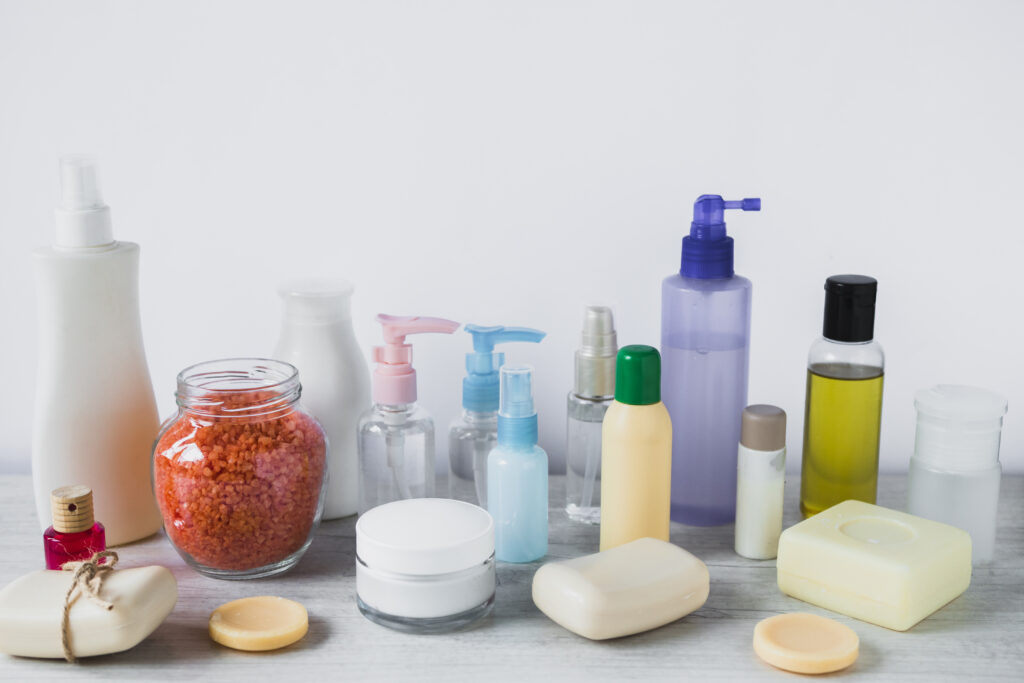
Whether you are launching a skincare range, importing a haircare line, or bringing a fragrance collection to Dubai for the first time, one fact applies to every cosmetic and personal care product: it cannot legally be sold in Dubai without first being registered with Dubai Municipality. The registration process runs through the Montaji platform and its outcome depends almost entirely on the quality and completeness of the documents you submit. An incomplete dossier is not just a minor inconvenience. It triggers query letters, extends your timeline, and in serious cases results in outright rejection. This guide walks through every mandatory cosmetic registration document required for a standard Dubai Municipality submission, explains exactly what each one must contain, and covers the additional documents specific product categories require.
Why Getting Your Cosmetic Registration Documents Right Matters More Than Speed
The Consumer Products Safety Section (CPSS) of Dubai Municipality reviews every submitted dossier against the Technical Guidelines for Cosmetics and Personal Care Products and the applicable GSO standards. Reviewers check for consistency between documents; the ingredient list on the CPSR must match the ingredient list on the label, which must match what is declared in the application form. Reviewers also check currency, completeness, and compliance independently. A dossier that is technically complete but internally inconsistent generates a query just as reliably as one that is missing a document entirely.
The most productive approach is to treat the document preparation phase as the quality control stage. A dossier built and cross-checked carefully before submission consistently clears Dubai Municipality review in under 22 working days. A dossier that goes in incomplete because the brand was in a hurry routinely takes two to three times longer once query cycles are accounted for.
Document 1: Cosmetic Product Safety Report (CPSR)
The CPSR is the technical foundation of every cosmetic registration dossier submitted in Dubai. It is a full safety assessment of the product, prepared and signed by a suitably qualified toxicologist typically holding a degree in toxicology, pharmacology, or a closely related discipline. The CPSR must be specific to the submitted product. Any generic report, template assessment, or report assessing the active components of a drug without considering its full formulation is unacceptable to Dubai Municipality.
A compliant CPSR covers:
- The identity and quantitative composition of the product including all active ingredients, excipients, and preservatives
- The physicochemical and microbiological specifications of the finished product
- The assessment of each ingredient’s safety at its concentration in the final formulation
- Assessment of any impurities, traces of prohibited substances, or restricted ingredient levels
- The toxicologist’s qualified conclusion that the product is safe for its intended use on the relevant body area by the intended consumer population
- Specific considerations for products intended for use near the eyes, on mucous membranes, or by children
CPSR quality check: Every active ingredient including botanical extracts, peptide actives, and high-concentration vitamin compounds must be assessed individually by name and concentration in the CPSR. If your product contains an ingredient added after the original CPSR was commissioned, the report must be updated before submission. An outdated CPSR that does not reflect the current formulation is a common and entirely avoidable rejection trigger.
Document 2: Complete INCI Ingredient List with Concentrations
All ingredients must be listed in International Nomenclature of Cosmetic Ingredients (INCI) format, in descending order of weight in the finished product, with percentage concentrations included. This list is submitted as part of the application and must match the ingredient declaration on the product label exactly right down to the order and INCI name format.
Examples of errors are when trade names are used instead of INCI names (example, “Matrixyl” instead of “Palmitoyl Pentapeptide-4”), exclusion of carrier or manufacturing agents, and water being included under the INCI name without specifying the actual INCI name, which is “Aqua.” It is essential that all ingredients found in the formulation should be listed and not just the active ingredients. In the event that there is compound ingredient like botanical extracts in your formula, these must all be included separately.
Document 3: Certificate of Free Sale (CFS)
The Certificate of Free Sale (CFS) is an official certificate issued by the respective regulatory body of the manufacturing country to prove that the product is legally manufactured and sold in that country. It demonstrates to Dubai Municipality that the product has cleared at least its home market’s regulatory standards.
Your CFS must:
- Be issued by a government authority not the manufacturer, brand owner, or chamber of commerce in isolation
- Name the product as it appears on your registration application product name discrepancies between the CFS and the application form are a frequent source of query letters
- Be current most CFS documents are considered valid for one to two years from the date of issue
- Be notarised and apostilled, or authenticated through the UAE Embassy in the country of origin where apostille is not available
- Be in English or Arabic, or accompanied by a certified official translation if issued in another language
Batch CFS strategy: If you are registering multiple products from the same manufacturer, request that the CFS lists all products being submitted in a single document. Authentication costs are charged per document, not per product; a single CFS covering ten products costs the same to authenticate as one covering a single product. This is one of the simplest ways to reduce total cosmetic registration document costs.
Document 4: Good Manufacturing Practice (GMP) Certificate
A GMP certificate confirms that the manufacturing facility operates under internationally recognised standards for cosmetic production. The relevant standard for cosmetic and personal care product manufacturing is ISO 22716 Good Manufacturing Practices for Cosmetics. This is distinct from pharmaceutical GMP standards (such as those issued by the PIC/S or WHO) which apply to medicines, not cosmetics. Submitting a pharmaceutical GMP certificate for a cosmetic product is a common mistake from brands whose manufacturers produce both pharmaceuticals and cosmetics from the same site. Dubai Municipality requires the cosmetics-specific ISO 22716 standard.
The GMP certificate must be current, must name the manufacturing site, and must be issued by an accredited certification body. If the manufacturing location already has an EU Cosmetics Regulation-compliant GMP evaluation or an NSF-approved GMP, this is usually regarded as equivalent to ISO 22716.
Document 5: Stability Data
The stability data confirms that the product is safe and efficacious as well as within specifications during the specified period of its shelf life. The stability data for the product being considered in the UAE market should take into consideration the IVb zone of the climate that is hot and humid where the stress parameters are 40 degrees centigrade and 75% relative humidity. There are products which pass the stability requirements of Zones I and II in Europe but not those of the UAE.
The stability dossier must cover:
- Physical stability appearance, colour, odour, texture, and viscosity throughout the test period
- Chemical stability active ingredient content and degradation product formation
- Microbiological stability where relevant, confirming preservative effectiveness throughout shelf life
- Container-closure integrity confirming the packaging maintains product quality under the stated storage conditions
Document 6: Bilingual Arabic and English Label Artwork
Label artwork is one of the most frequently queried elements in Dubai Municipality cosmetic registration. The label must appear in both Arabic and English and must meet all mandatory content requirements under GSO 1943:2024 and Dubai Municipality’s Technical Guidelines. Required elements include:
- Product name and function (in both languages)
- Full INCI ingredient list in descending order of concentration in both Arabic and English
- Manufacturer’s name and country of origin
- Net weight or volume
- Batch number format
- Manufacturing date and expiry date format
- Storage conditions
- Any mandatory warnings (for example, “Keep out of reach of children”, “Avoid contact with eyes”)
- Instructions for use where relevant to safety
The Arabic label is reviewed independently from the English label by Dubai Municipality’s CPSS team. Both versions must carry the same information: a label where the Arabic ingredient list is shorter than the English version, or where different storage instructions appear in each language, will generate a query. Arabic and English labels must be submitted as separate PDF files, not merged into one document.
Document 7: High-Resolution Product Packaging Images
Clear photographic images of all sides of the finished product packaging including the primary container and any secondary packaging must be submitted alongside the label artwork. Images must be high-resolution (minimum 300 DPI), in colour, and must accurately reflect the product as it will appear on the market. The packaging images and the submitted label artwork must be identical; any discrepancy between what the images show and what the label artwork declares will generate an immediate query.
Document 8: Manufacturer Authorisation Letter
When the Montaji account holder and registration applicant is not the product manufacturer for example, when a UAE importer or distributor is registering a product on behalf of a foreign brand a signed and notarised authorisation letter from the manufacturer or brand owner is required. The letter must confirm that the UAE entity is authorised to register the product, hold the registration, and distribute and sell the product in Dubai on the manufacturer’s behalf. It must include the product name, the manufacturer’s and distributor’s full legal names and addresses, and be dated within a reasonable period of the submission date.
Document 9: UAE Mainland Trade Licence
The holder of the Montaji account must have a valid trade licence from the UAE mainland that clearly indicates the trade in cosmetic or personal care products as an allowed activity. The copy of the trade licence needs to be provided along with other supporting documents. Trade licences from free zones are not acceptable for registering Montaji cosmetics. The registered entity needs to be from the UAE mainland. In case your current trade licence doesn’t include any activity related to cosmetic products, you need to amend your trade licence first.
Additional Cosmetic Registration Documents for Specific Product Categories
For certain products, additional dossiers will be needed other than those required above:
Sunscreens and SPF Products
Sunscreen products containing SPF or UV claims need to provide test results of SPF testing from an accredited testing lab, a test report on the UV Protection Factor (UPF) in case it applies, and stability testing to prove sun protection effectiveness during shelf life. Dubai Municipality reviews sun protection claims closely SPF values declared on the label must be supported by the submitted test data with no discrepancy.
Fragrances and Perfumes
All fragrance-containing products, perfumes, eau de toilette, body sprays, and any cosmetic containing a fragrance component require an IFRA (International Fragrance Association) compliance certificate confirming that the fragrance compound meets IFRA standards for safe use in its specific cosmetic application. The IFRA certificate is obtained from the fragrance supplier and must be product-specific rather than a generic supplier certification.
Hair Colouring Products
Permanent, semi-permanent, and bleaching hair products require additional safety data specifically addressing the oxidative colouring ingredients and their concentrations. The label must include the required hair dye allergy warning and the pre-application skin sensitivity test instruction in both Arabic and English. Products containing ingredients that appear on restricted lists under GSO 1943:2024 must include documentation confirming the ingredient is used within the permitted concentration limits.
Products for Infants and Children
Cosmetics intended for use on infants or children (defined as individuals under three years of age for the most stringent category, or under twelve for broader paediatric products) require a CPSR that specifically addresses paediatric safety. The safety assessor must evaluate ingredient safety at concentrations appropriate for younger, more sensitive skin. The label must also carry a clear age-designation and any required usage precautions.
The Most Common Cosmetic Registration Document Mistakes
Understanding where other applicants lose time saves you the same cost:
- Expired CFS: A CFS issued more than two years before submission is frequently rejected. Check the issue date before building the rest of your dossier around it
- CPSR covers actives only: A report that assesses only the active peptides or botanical extracts without reviewing the full formulation fails the completeness requirement
- Inconsistent product name: The product name on the CFS, the GMP certificate, the CPSR, the label, and the Montaji application must all match precisely. A brand-name variation between any two documents will generate a query
- GMP standard mismatch: Pharmaceutical GMP certificates submitted for cosmetic products are routinely rejected. Confirm that your GMP certificate references ISO 22716 specifically
- Arabic and English labels merged into one PDF: Both language versions must be uploaded as separate files
- Stability data under Zone I conditions only: European stability data that does not cover Zone IVb conditions is insufficient for UAE registration. Request UAE-condition stability testing from your manufacturer before submission
How Hawkridge Corp Prepares Your Cosmetic Registration Documents for Dubai
At Hawkridge Corp, cosmetic registration document preparation is the core of our Dubai Municipality submission service. We take each document in your dossier seriously, reviewing it against current Dubai Municipality requirements, cross-checking it for internal consistency, and confirming it is complete, current, and correctly formatted before a single file goes near the Montaji portal.
We coordinate CPSR preparation with qualified toxicologists, verify INCI ingredient declarations, review Arabic and English label artwork for Dubai Municipality compliance, manage CFS authentication, and identify any additional documents your specific product category requires including SPF testing, IFRA certificates, and paediatric safety considerations.
We also pre-screen your dossier against common rejection triggers before submission, eliminating the majority of query risk that extends timelines for most applicants.
Whether you are registering a single product or building out a full cosmetics portfolio for the Dubai market, Hawkridge Corp delivers the document preparation quality and the submission management experience to get your cosmetic registration right the first time.
Final Thoughts
The cosmetic registration document requirements for Dubai Municipality are well-defined and consistently applied. Every product needs a CPSR, a full INCI ingredient list, a CFS, a GMP certificate, stability data, bilingual label artwork, packaging images, and where the registrant is not the manufacturer, an authorisation letter and a mainland UAE trade licence. Specific product categories add further requirements on top. Getting every document right, checking internal consistency before submission, and understanding what Dubai Municipality reviewers are looking for at each step is the difference between a registration that completes in three weeks and one that drags through months of query cycles. Start with a complete, well-prepared dossier, and your cosmetic registration will move as quickly as the process allows.